Creaminess is texture rather than flavour, and that distinction is the whole thing. You are not trying to replace what cream tastes like, because cream barely tastes of anything. You are replacing what it does: fat suspended in water, thick enough to coat a spoon and stable enough not to split.
Once you frame it that way, the five options stop being substitutes for one ingredient and start being five different mechanisms, each good at a different job.
| Base | What it gives you | What to watch |
|---|---|---|
| Cashews | Richness and silk, the closest to real cream | Must be properly soft, or it stays gritty and no blending recovers it |
| Silken tofu | Body and neutrality, with no flavour of its own | Thin on its own, so it usually wants a thickener alongside |
| White beans | The same body for a fraction of the price | A faint bean flavour, which acid and miso cover |
| Potato | Stretch and gloss that nothing else here gives | Goes gluey if you over-blend it, and there is no way back |
| Coconut milk | Fat, and plenty of it, with no soaking or blending | It tastes of coconut unless you deal with that on purpose |
Why cream is hard to replace at all
Dairy cream is an emulsion: fat droplets held evenly through water by milk proteins, which stop the two separating. Every option below is an attempt to rebuild that structure from a different starting point, and each one gets part of the way.
Cashews and coconut bring their own fat. Tofu and beans bring protein and body but very little fat. Potato brings neither and works entirely through starch. That is why the good vegan sauces so often combine two of them: one for richness, one for structure. Reaching for a single ingredient to do both jobs is the usual reason a sauce comes out either thin or gluey.
A carton of plant cream skips all of this, but it has its own failure modes, and which carton depends on what the sauce does to it. That is covered in which vegan dairy substitute a recipe needs.
Cashews: the default, with one condition
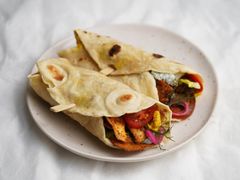
Cashews blend into something genuinely close to cream, but only if they are soft enough first. Roasted Miso Cabbage with Whipped Tofu is explicit about it: soak overnight in cold water, or boil for twenty minutes.
The reason under-soaked cashews cannot be rescued is mechanical. A blender breaks softened tissue apart, but a hard nut fragments instead of collapsing, so what you get is very small pieces of cashew rather than a suspension. Blending longer just makes the pieces smaller and heats the sauce. If it is grainy after two minutes, it will be grainy after ten.
A jug blender needs the nuts softer than a high-powered one does. If you are working with an ordinary blender, boil rather than soak.

Potato and cashew together
Vegan Mac and Cheese with Tofu uses both, and the reason is worth stealing: the potato is what makes the sauce stretchy and glossy rather than grainy, the cashews bring the richness. Neither does both jobs alone. That combination is a long-standing trick in vegan cooking and it is the closest thing here to a formula.

White beans: the cheap one
Tofu 'Chicken' with Spinach Sauce blends cannellini beans with soy milk and miso. Beans cost a fraction of cashews, blend smooth, and carry body. The trade is a faint bean flavour, which lemon and miso cover.
Legumes do the same job without being blended at all, if you cook them long enough. Mung Bean Dhal simmers until the beans break down on their own into something thick and creamy. The starch they release is the thickener, and no blender is involved.


The two shortcuts: hummus and avocado
Both are pre-made emulsions, which is why they behave like a sauce base rather than an ingredient.
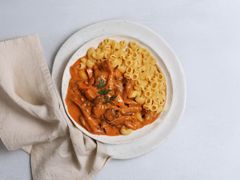
Creamy Hummus Pasta with Crispy Tofu stirs hummus straight into softened onion and garlic and then loosens it with soy cream and pasta water. The chickpeas and tahini were already blended for you; all the recipe adds is heat and liquid.
Avocado Basil Pasta with Marinated Tofu blends avocado with basil, nutritional yeast, lemon and cream into a sauce that is smooth without being cooked at all. Avocado is the one mechanism here that does not want heat: it dulls and browns.


Coconut, and the trick nobody mentions
Coconut milk is the easiest source of fat and the most obvious in flavour. Our Vegan Aquafaba Chocolate Ice Cream stirs a quarter teaspoon of baking soda into it, which neutralises the coconut taste and leaves the fat behind, exactly what you want in a chocolate dessert.
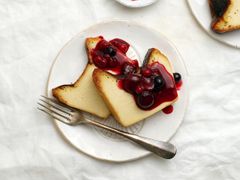
Where you do want the coconut, it needs setting rather than thickening. Vegan Panna Cotta brings coconut milk to a boil with agar and lets it set in the fridge. Fat for richness, agar for structure. Coconut milk alone will not hold a shape.


The free one: pasta water
Starchy pasta water is an emulsifier and it costs nothing. Reserve it before draining, which is the step people miss, because the moment has passed the second the water hits the sink.
What it does is worth knowing, because it explains why a splash of plain water does not work the same way. The starch that has come off the pasta acts as the bridge between fat and water that dairy protein would otherwise provide. It is the same job an egg yolk does in a carbonara, done by a cheaper molecule.
It is what holds the three pasta sauces here together. Vegan Cacio e Pepe has almost nothing else in it: toasted crushed pepper, butter, cream, nutritional yeast and pasta water beaten into a sauce. Pasta with Cheesy Mushroom Sauce and Tofu uses it to loosen a sauce that has gone too thick, and Creamy Hummus Pasta reserves 100ml explicitly for the job.